Introduction
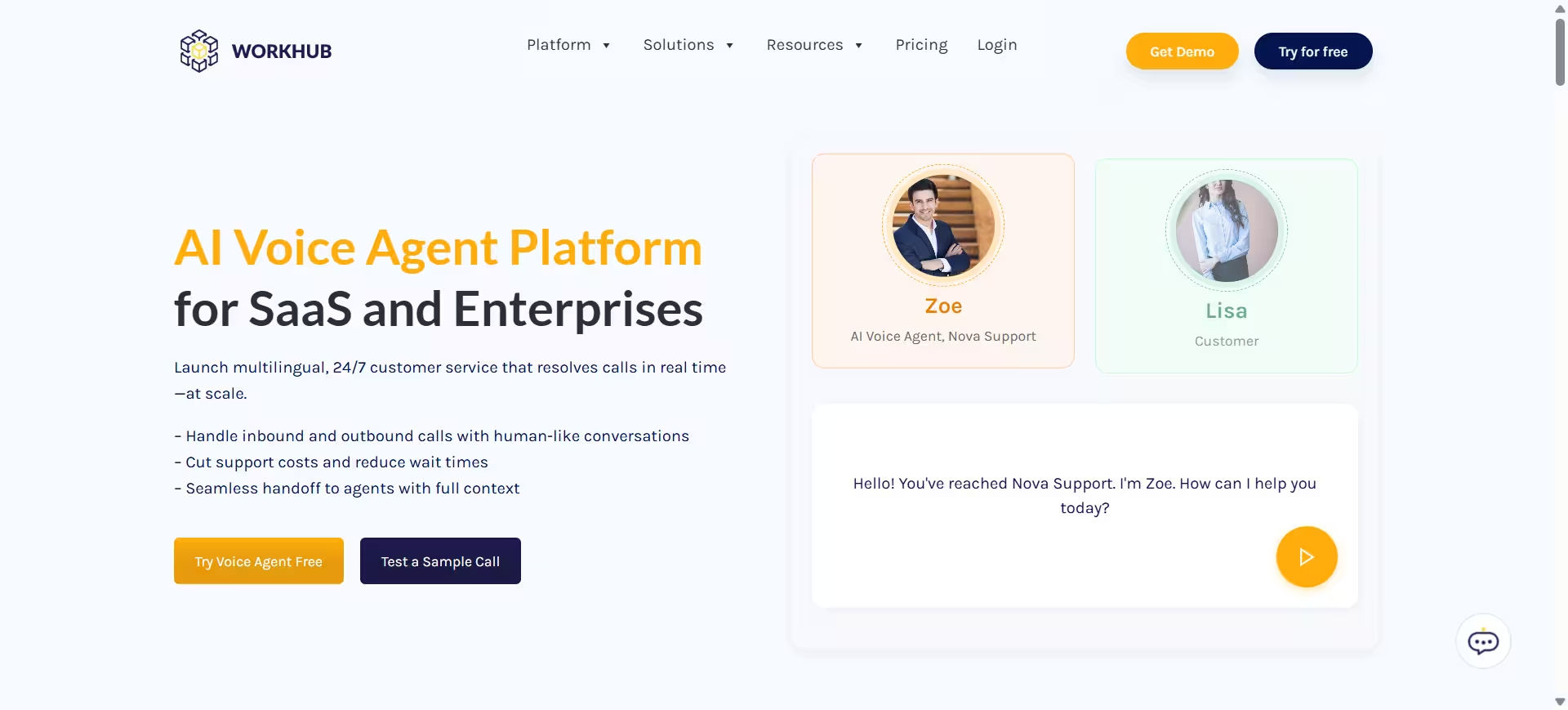
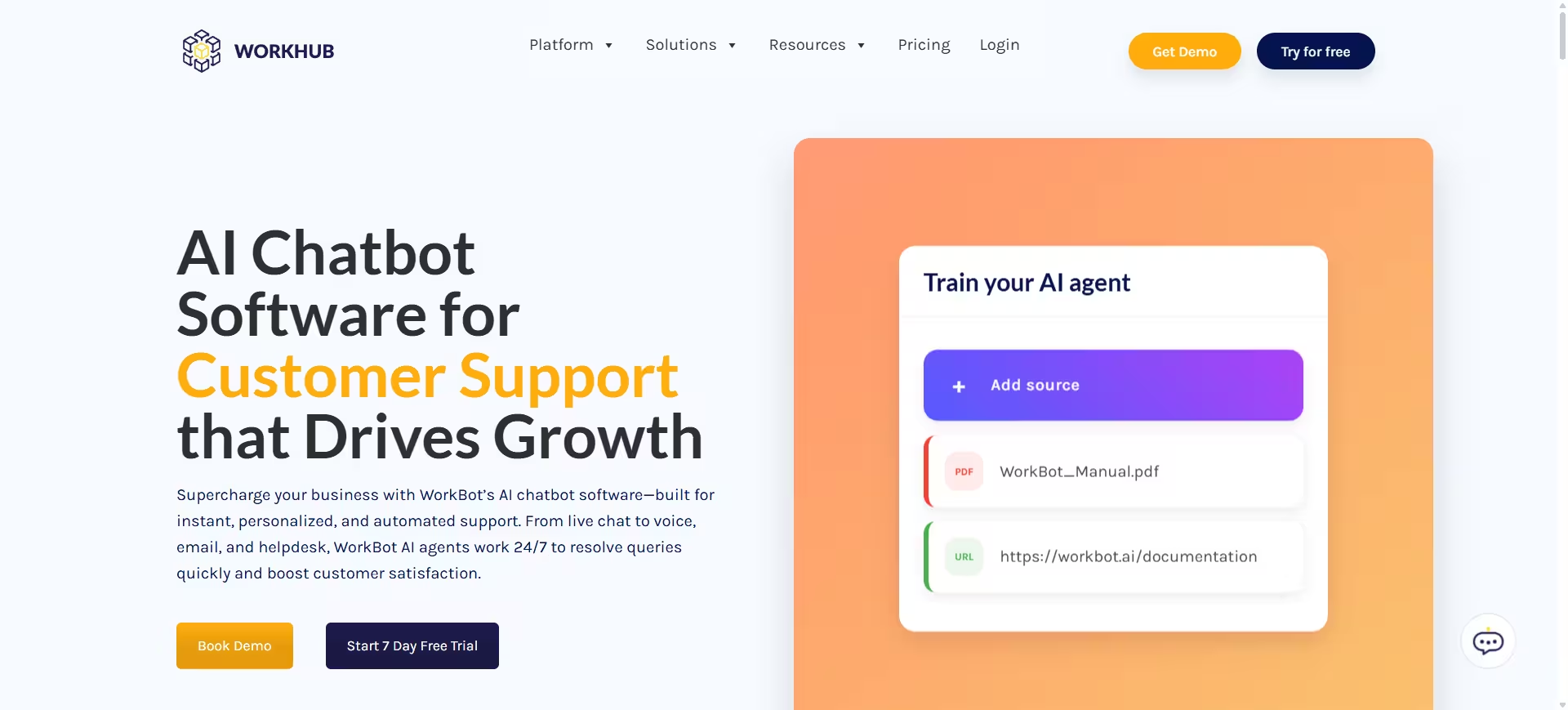
WorkHub is an AI-powered business automation platform designed to streamline customer support, sales, and internal workflows through advanced chatbot and voice‐agent technology. At its core is the flagship offering called “WorkBot,” which empowers companies to automate customer inquiries, scheduling, order tracking, live-agent handoff and other repetitive tasks without building a full AI stack from scratch. The platform supports no-code deployment, works across multiple channels (chat, email, voice), and integrates with existing CRMs, helpdesks and business applications.
What differentiates WorkHub is its balance of “ready-to-use” automation and deep customisation. You can launch with preset templates for your industry—e.g., e-commerce order support, SaaS onboarding or appointment scheduling—and then extend via custom API integrations and unique workflows tailored to your business. Security and compliance are also key; the platform is built with enterprise-grade standards in mind, making it suitable for both agile startups and regulated industries.
For companies needing to scale support operations, enable 24/7 service, reduce cost per inquiry and improve responsiveness, WorkHub provides a unified interface, rapid deployment, and measurable ROI. Whether you’re automating FAQs with chatbots, routing voice calls to intelligent agents, or querying internal databases via conversational AI, the platform aims to make “smart automation” accessible without demanding large engineering investments.
In summary: WorkHub offers organisations a way to transform workflow and support operations—replacing manual, repetitive tasks with intelligent agents, enabling teams to focus on higher-value work, and delivering faster, more consistent service. It’s built for businesses that want scale and customisation married with ease—an AI automation layer that grows with you.
🌟 Why You Should Choose
Rapid Deployment with Industry-Specific Templates – Organizations can launch automation quickly using pre-built workflows for support, scheduling, order tracking and more, reducing time-to-value.
Omni-Channel AI Agents (Chat + Voice) – Supports both chat and voice automation, allowing seamless customer interactions across website chat widgets, messaging apps, phone IVR and support desks.
Deep Customisation & Integration Flexibility – While starter workflows are ready, you can tailor agents, connect via API to your CRM, help desk, calendar or e-commerce tools, and build custom actions as your business model evolves.
Scalable & Enterprise-Grade Architecture – Built to support high volumes of interactions, 24/7 operations and compliance requirements, allowing growth without flips in infrastructure.
Cost & Efficiency Cut with Human Focus – By off‐loading routine and repetitive tasks to AI agents, you free human agents for complex work, reduce response times, improve customer satisfaction and lower operational cost.
⚙️ Additional Highlights
No-code drag-and-drop builder makes it accessible to non-technical users while still offering advanced options for developers.
Integrations cover a wide range of tools: CRM systems, calendaring, e-commerce platforms, messaging apps and voice systems.
Analytics dashboard measures performance of AI agents (response times, resolution rate, escalation rate) enabling continuous improvement.
Customisable end-to-end workflows: from lead qualification, booking meetings, responding to order queries, to automated follow-ups—one platform handles it all.
Designed for global usage: multi-channel, multi-language support, suitable for businesses operating internationally or across multiple touchpoints.
Launch Date & Founder Name
Launch Date: The platform became publicly available around 2022-2023.
Founder/Company: The company is listed as WorkHub Platform Inc., based in California, United States.
Pros And Cons
Pros:
- Enables fast automation and supports 24/7 digital customer support with minimal upfront technical investment.
- Multi-channel (chat + voice) capability offers flexibility depending on customer preference.
- Strong integration ecosystem means you can plug into your existing tech stack rather than building from scratch.
- Scalable architecture supports growth and enterprise needs without frequent platform changes.
- Potential for significant cost savings and improved customer experience when routine tasks are off-loaded.
Cons:
- While basic templates are fast to deploy, more advanced workflows and custom integrations may still require expert support, extending setup time.
- For very niche or unconventional workflows, the no-code builder might reach limits, requiring custom development or workarounds.
- As with any AI automation platform, quality depends on data and implementation — poor knowledge-bases or workflows may yield sub-optimal performance.
- Cost will scale with usage volume, number of channels, integrations and customisation — small businesses should carefully assess pricing vs usage.
- For organisations with very low support volume or simple use-cases, a lighter automation tool might be more cost-efficient.