Let’s be honest — managing a construction project in 2026 still feels like juggling flaming torches while blindfolded. Budgets spiral out of control. Timelines slip by weeks, sometimes months. Communication between architects, contractors, and clients happens across a tangled web of spreadsheets, WhatsApp groups, and crumpled paper blueprints.
If you’ve ever been involved in a building project, whether as a developer, general contractor, or even a homeowner overseeing renovations, you know the pain. According to a McKinsey Global Institute report, the construction industry is among the least digitized sectors in the world, with large projects typically running 80% over budget and 20 months behind schedule (McKinsey, 2023).
That’s precisely the broken system OMMA Build is designed to fix.
I spent the past several weeks diving deep into what OMMA Build offers, how it works, and whether it genuinely delivers on its promise of smarter, faster, and more transparent construction management. Here’s everything I found.
What Is OMMA Build?
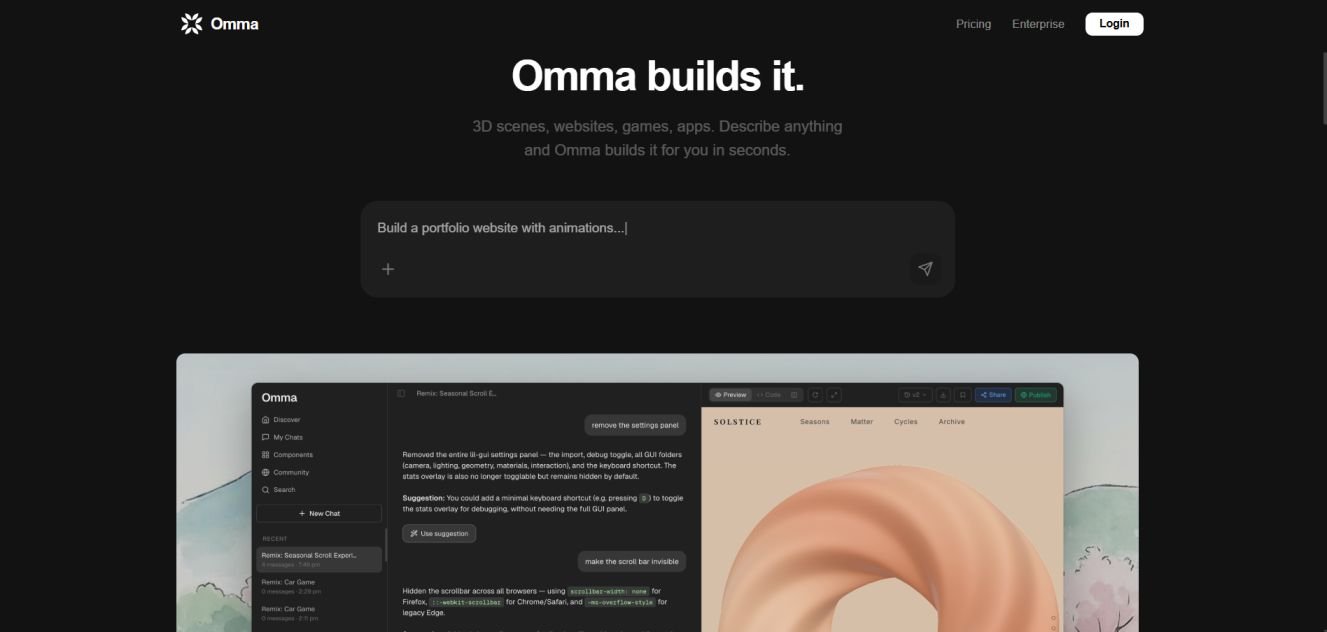
OMMA Build is an AI-powered construction management platform designed to streamline every phase of the building process — from initial project planning and design coordination all the way through execution, tracking, and handover.
Available at omma.build, the platform positions itself as a centralized digital workspace where developers, architects, contractors, project managers, and clients can collaborate in real time. Instead of scattering project data across disconnected tools, OMMA Build brings everything under one intelligent roof.
Think of it as the “operating system” for construction projects — one that doesn’t just organize data but actively uses artificial intelligence to predict risks, optimize scheduling, and keep every stakeholder aligned.
The core problem OMMA Build solves is deceptively simple yet enormously impactful: it eliminates the chaos of fragmented communication, manual tracking, and reactive decision-making that plagues virtually every construction project today.
Why You Should Choose OMMA Build
Choosing a construction management platform isn’t a small decision. It touches every person, every dollar, and every deadline on a project. Here’s why OMMA Build stands out in an increasingly crowded field of construction tech tools:
1. Centralized Project Intelligence
Rather than forcing teams to bounce between Procore for one thing, Excel for another, and email for everything else, OMMA Build consolidates project data into a single, intelligent dashboard. Every update, document revision, schedule change, and budget adjustment lives in one place.
2. AI-Driven Decision Support
This isn’t just another project tracker with a pretty interface. OMMA Build leverages artificial intelligence to surface insights that humans typically miss — potential schedule conflicts, budget overrun risks, and resource allocation inefficiencies — before they become expensive problems.
3. Real-Time Collaboration Without the Noise
Anyone who’s managed a job site knows that critical information gets lost in group chats and buried email threads. OMMA Build structures communication around specific tasks, milestones, and deliverables, so the right people see the right information at the right time.
4. Accessibility for Non-Technical Users
Not every stakeholder on a construction project is tech-savvy. OMMA Build is built with an intuitive interface that a seasoned general contractor and a first-time property developer can both navigate comfortably.
Additional Highlights
Here are some standout features that caught my attention during my research and exploration:
- Smart scheduling engine that auto-adjusts timelines based on real-world progress and dependencies
- Budget tracking with predictive analytics to flag cost overruns early
- Document management with version control — no more confusion about which blueprint is current
- Mobile-friendly design for on-site access from tablets and smartphones
- Role-based permissions so subcontractors only see what’s relevant to their scope
- Integration capabilities with existing tools and workflows
- Clean, modern UI that reduces the learning curve significantly
Launch Date & Founder Information
OMMA Build emerges from the growing wave of construction technology (“ConTech”) startups that recognized a fundamental truth: the construction industry’s resistance to digital transformation isn’t about willingness — it’s about the tools not being good enough.
The platform was developed by a team with deep roots in both construction project management and software engineering — a combination that’s surprisingly rare in this space. Most construction software is built by pure technologists who’ve never stood on a job site, or by construction veterans who lack the technical depth to build truly modern software. OMMA Build bridges that gap.
The company’s mission is clear: make construction project management intelligent, transparent, and accessible — not just for enterprise-level developers, but for mid-size firms and independent builders who’ve been underserved by existing platforms.
Key Features Breakdown
📊 AI-Powered Project Dashboard
What it is: A centralized command center that aggregates all project data — schedules, budgets, documents, tasks, and communications — into a single real-time view.
Why it matters: Construction project managers typically spend up to 35% of their time simply searching for project information, according to research from FMI Corporation (FMI, 2022). An intelligent dashboard doesn’t just display data — it prioritizes what demands attention right now.
🗓️ Smart Scheduling & Timeline Management
What it is: A dynamic scheduling tool that goes beyond static Gantt charts. It understands task dependencies, resource availability, and historical data to create realistic, adaptive timelines.
Why it matters: Static schedules are fiction the moment they’re created. Real construction projects are dynamic. A smart scheduling engine that automatically adjusts when one task slips — recalculating downstream impacts in real time — is genuinely transformative.
💰 Predictive Budget Analytics
What it is: Budget tracking enhanced with AI-driven forecasting that identifies spending trends and projects potential overruns before they materialize.
Why it matters: The Project Management Institute (PMI) found that poor cost estimation and budget management are among the top reasons construction projects fail (PMI, 2023). Catching a 5% budget drift at week three is manageable. Discovering a 30% overrun at month six is catastrophic.
📁 Intelligent Document Management
What it is: A centralized repository for all project documents — plans, permits, contracts, change orders — with automatic version control and smart search.
Why it matters: On complex projects, the sheer volume of documentation is staggering. Knowing that everyone is working from the current version of a drawing or specification prevents costly rework and legal disputes.
👥 Stakeholder Collaboration Hub
What it is: Structured communication channels tied to specific project elements, replacing chaotic group messages with organized, searchable, and accountable conversations.
Why it matters: Miscommunication is the silent killer of construction projects. When a subcontractor misses a critical design change buried in an email thread, the consequences are measured in weeks and thousands of dollars.
Pros and Cons
✅ Pros
- Genuinely intuitive interface that reduces the learning curve
- AI capabilities that provide actionable insights, not just data dumps
- Strong real-time collaboration tools that reduce communication breakdowns
- Predictive budget analytics that can save significant money on large projects
- Mobile-optimized for real-world job site usage
- Clean, modern design that feels current rather than dated
❌ Cons
- Newer platform — may have a smaller user community compared to long-established tools
- Integration ecosystem still growing; may not yet connect with every niche tool
- Advanced AI features may require sufficient project data to reach full predictive accuracy
- Pricing and plan details should be evaluated against project scale and needs
Common Misconceptions About AI in Construction Management
“AI will replace project managers.”
This is perhaps the biggest myth. AI in platforms like OMMA Build is designed to augment human decision-making, not replace it. It surfaces patterns and risks that would take a human analyst hours or days to identify manually. The project manager still makes the call. According to the World Economic Forum, AI in construction is best understood as a “co-pilot” rather than an autopilot (WEF, 2024).
“Digital construction tools are only for large enterprises.”
This was true a decade ago. Platforms like OMMA Build are specifically designed to be accessible to mid-size firms, independent developers, and smaller construction companies — not just billion-dollar general contractors.
“Adopting new software will slow us down.”
There’s an initial investment of time, absolutely. But the National Institute of Standards and Technology (NIST) estimates that inadequate interoperability and inefficient information management cost the U.S. construction industry approximately $15.8 billion annually (NIST, 2024). The short-term learning curve pales in comparison to the long-term cost of staying analog.
“Construction is too unpredictable for AI to be useful.”
Actually, the unpredictability is precisely why AI is valuable. Machine learning algorithms excel at finding patterns in noisy, complex datasets — which is exactly what construction project data looks like.
Important Tips for Getting the Most Out of OMMA Build
- Start with one project. Don’t try to migrate your entire operation overnight. Pilot the platform on a single project, learn the workflows, and then scale.
- Get buy-in from the field. The best software in the world is useless if superintendents and foremen refuse to use it. Involve on-site teams early in the adoption process.
- Feed it good data. AI is only as good as its inputs. Ensure that schedules, budgets, and task updates are entered accurately and consistently.
- Use the collaboration features aggressively. Resist the temptation to fall back on email and text messages. The more communication flows through the platform, the more valuable its record-keeping and accountability features become.
- Review AI-generated insights regularly. Don’t just let predictive alerts pile up unread. Dedicate time each week to reviewing what the system flags and acting on it proactively.
Final Verdict
The construction industry is at an inflection point. The firms that embrace intelligent digital tools will build faster, waste less, and win more bids. Those that cling to spreadsheets and gut instinct will increasingly fall behind.
OMMA Build represents the kind of platform this industry desperately needs — one that’s smart enough to add genuine value through AI, yet accessible enough that you don’t need a computer science degree to use it. It’s not perfect (no platform is), and as a newer entrant, it still has room to grow its ecosystem and community.
But the foundation is strong. The vision is clear. And the problem it solves is painfully real.
If you’re a developer, contractor, or project manager who’s tired of managing million-dollar projects with tools designed for the 1990s, OMMA Build deserves a serious look. Head to omma.build and explore what a modern construction management experience actually looks like.
Because in 2025, the buildings may be physical — but the best way to manage them is undeniably digital.
Disclaimer: This review is based on independent research and exploration of the OMMA Build platform. Individual results may vary based on project complexity, team size, and implementation approach. Always evaluate any software against your specific operational requirements before committing.