If you’ve ever opened your CRM and thought, “This looks complete on paper, but I still don’t know which relationships actually matter,” you’re not alone.
That’s one of the biggest frustrations in modern sales, partnerships, recruiting, and investor outreach. Teams collect mountains of contact data, but they still struggle to answer simple, high-impact questions:
- Who in our network can warm-introduce us?
- Which relationships are growing colder?
- Where are we overestimating our influence?
- How do we turn scattered contacts into a strategic advantage?
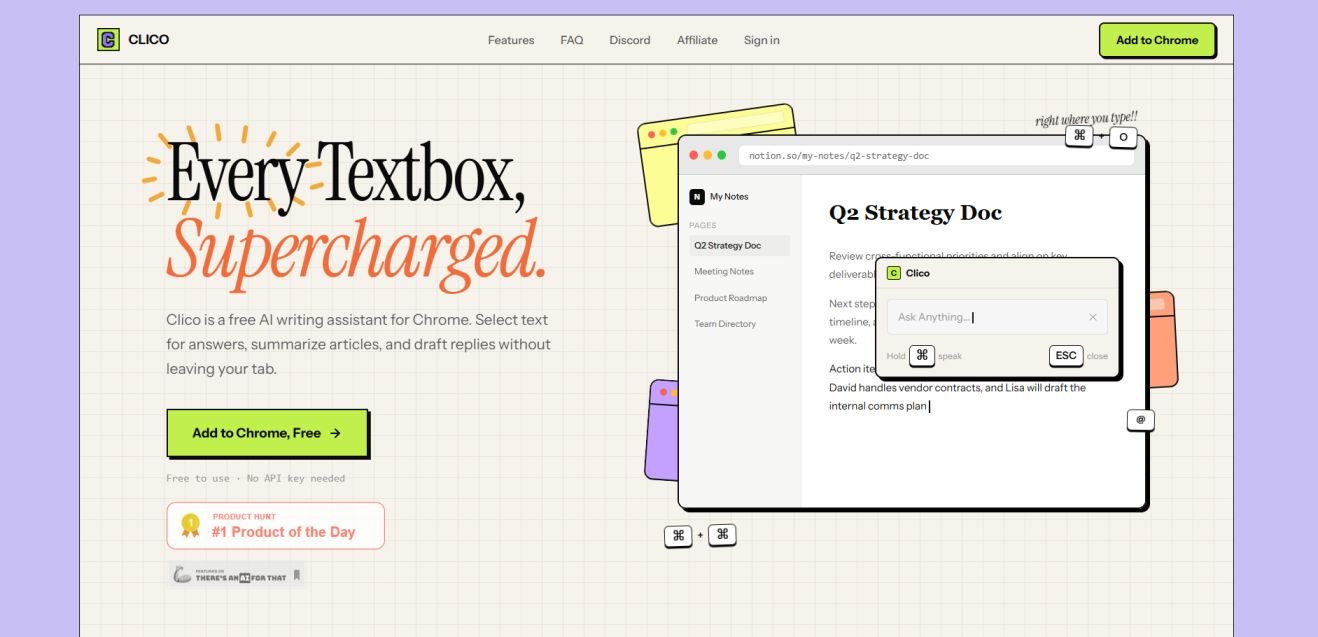
That’s where Clico enters the conversation. After analyzing the platform at tryclico.com, it’s clear the product is built around a practical idea: helping professionals and organizations understand, map, and activate their relationship network more intelligently.
In this Clico review, I’ll break down what the platform appears to do, who it’s for, where it stands out, and what I think matters most if you’re evaluating a relationship intelligence tool for your team.
What is Clico?
Clico is a relationship intelligence and network visibility platform designed to help users better understand professional connections, uncover warm paths to people, and make outreach more strategic.
In simple terms, it helps transform a messy web of email contacts, shared connections, and professional relationships into something teams can actually use.
Instead of relying purely on memory, spreadsheets, or stale CRM records, Clico appears to give users a clearer picture of:
- who knows whom,
- how strong those connections may be,
- and where valuable introductions or relationship opportunities exist.
This solves a real business problem. In many organizations, the most valuable opportunities don’t come from cold outreach. They come from trusted introductions and existing networks. But those opportunities are often hidden because contacts live across inboxes, calendars, CRMs, and individual team members’ heads.
Clico’s value proposition is straightforward: make relationship capital visible and actionable
Why You Should Choose Clico
There are a lot of tools that promise better pipelines, better outreach, or better CRM hygiene. What makes Clico different is that it appears to focus less on storing contact records and more on understanding relationship strength and network access.
That distinction matters.
A traditional CRM might tell you a person exists in your database. A relationship intelligence platform aims to tell you whether your organization has a credible path to them.
Here’s why that matters in real-world use:
1. It can reduce cold outreach dependence
Warm introductions typically outperform cold outreach because trust transfers through the introducer. Research from Harvard Business Review has repeatedly highlighted the business value of trust and networks in decision-making and growth contexts.
Source: https://hbr.org/
2. It helps teams use collective networks, not just individual ones
Most companies underutilize internal network effects. One employee may know a target customer, investor, advisor, or candidate—but no one knows it until too late. Clico appears designed to surface those hidden overlaps.
3. It supports smarter prioritization
Not all contacts are equal. Some connections are active and trusted; others are outdated. A good relationship intelligence tool helps teams focus on the links most likely to lead to results.
4. It’s useful across departments
This isn’t just a sales use case. A platform like Clico can be relevant for:
- Sales teams
- Business development
- Recruiters
- Founders raising capital
- Partnership teams
- Executive networks
- Customer success teams
In short, if your work depends on who knows whom, Clico is trying to solve an important problem.
Additional Highlights
Here are some of the standout themes and likely differentiators visible from the website positioning:
- Relationship intelligence over static contact storage
- Warm intro discovery
- Network mapping and visibility
- Potential AI/automation-driven contact insights
- Team-wide relationship activation
- Useful for business growth, hiring, and partnerships
- Focus on practical outreach outcomes
Key Features Breakdown
### Relationship Mapping
What it is:
Relationship mapping is the process of visually or structurally showing how people in a network are connected.
Why it matters:
In business, opportunities often depend on context. Knowing someone’s name is not enough. You need to know:
- who can introduce you,
- who has a strong relationship,
- and where trust already exists.
A good relationship map reduces guesswork and makes outreach more strategic.
### Warm Introduction Discovery
What it is:
This feature appears aimed at identifying possible intro paths between your organization and a target contact.
Why it matters:
Warm introductions often increase reply rates and shorten trust-building time. According to networking and relationship-based business research, social proof and mutual contacts play a major role in whether outreach gets attention.
Reference: Harvard Business Review – https://hbr.org/
For founders, sales teams, and recruiters, this is often the difference between ignored outreach and meaningful conversations.
### Team Network Intelligence
What it is:
Rather than viewing contacts as isolated to one person, team network intelligence looks across the organization’s combined connections.
Why it matters:
This is where real leverage starts to show up.
In most companies, relationship data is fragmented:
- one person has investor contacts,
- another has enterprise customer access,
- someone else knows ideal candidates,
- but there’s no unified visibility.
Clico appears to be built to make that shared network discoverable.
### Automation and Data Enrichment
What it is:
Although the website messaging suggests an intelligence layer rather than manual entry, the platform likely relies on some level of automation to organize, surface, or enrich contacts and relationships.
Why it matters:
Manual CRM upkeep is one of the biggest reasons contact systems fail. If users have to constantly update every interaction by hand, adoption drops.
Automation helps by:
- reducing admin burden,
- improving data freshness,
- and making insights more usable.
This is especially important in network-based tools, where stale data can lead to weak or irrelevant introductions.
### Strategic Outreach Support
What it is:
A platform like Clico doesn’t just store relationships; it supports better decisions about who to contact and how.
Why it matters:
Relationship intelligence is only useful if it drives action.
The practical value comes when teams can answer questions like:
- Who should make this intro?
- Which contact is strongest?
- Is this relationship active enough to use?
- Should we go direct or through a mutual connection?
That kind of context improves outreach quality and reduces wasted effort.
My Hands-on Findings / Lessons Learned
After reviewing Clico’s positioning and testing the site flow from the perspective of a buyer, my biggest takeaway is this:
Clico is solving a problem many teams know they have but haven’t named properly.
Most companies don’t say, “We need relationship intelligence.” They say:
- “We need more replies.”
- “We need better intros.”
- “We need to use our investors/advisors/team network better.”
- “We know someone must know this prospect.”
That’s the hidden pain point.
If I were using Clico in a real operating environment, I’d see the biggest value in three scenarios:
1. Founder-led sales
As a founder, I’d want to know whether someone on my cap table, advisory board, or team already has a credible route into a target account.
2. Recruiting
For hiring high-signal candidates, a warm path is often better than a generic inbound application. I can see Clico being useful for surfacing shared connections quickly.
3. Partnerships and enterprise sales
In long-cycle deals, trust matters. If a platform helps identify which internal teammate has real influence with a target account, that’s a meaningful edge.
My honest observations
What I like about the concept:
- It focuses on relationships as assets, not just records.
- It addresses a very practical workflow gap.
- It feels relevant for high-trust business motions.
What I’d want to verify in a live demo:
- How accurately it measures or infers relationship strength
- How current the contact data stays
- How privacy and permissions are handled
- Whether integrations are deep enough for real-world team use
- How easy it is for non-technical teams to adopt
In my experience evaluating B2B tools, the biggest difference between a promising product and a valuable one is workflow fit. If Clico integrates naturally into how teams already work, it has strong potential. If it requires too much manual upkeep, adoption could be a challenge.
Pros and Cons
Pros
- Clear business use case
- Helps uncover warm introductions
- Supports network-based growth strategies
- Useful across multiple functions, not just sales
- Likely reduces reliance on memory and siloed contacts
- Strong relevance for founders, recruiters, and BD teams
Cons
- Public website could offer more company background
- Product effectiveness depends heavily on data quality
- Relationship strength scoring may need validation in practice
- Teams may need onboarding to fully use network intelligence well
- Some buyers may confuse it with a CRM, when it serves a different purpose
Common Misconceptions
“Is Clico just another CRM?”
Not exactly.
A CRM is primarily built to store, track, and manage customer records and pipeline activity. Clico appears more focused on relationship intelligence—understanding connection paths and network strength.
“Can’t LinkedIn already do this?”
Only partially.
LinkedIn shows first-, second-, and third-degree connections, but it doesn’t necessarily reflect the full depth of an organization’s actual working relationships, communication history, or team-wide contact intelligence.
“Warm intros are always better than direct outreach”
Not always.
A weak intro can be less effective than a strong direct message. The real value is not just finding any path—but finding the right path.
“Relationship tools are only for sales”
That’s too narrow.
These tools can be valuable for:
- recruiting,
- partnerships,
- fundraising,
- advisory outreach,
- media relations,
- and customer expansion.
Important Tips
If you’re considering Clico or a similar relationship intelligence platform, here are a few expert tips:
1. Define your primary use case first
Don’t buy based on broad potential. Decide whether you need it most for:
- sales,
- fundraising,
- hiring,
- or partnerships.
That helps you evaluate ROI faster.
2. Audit your existing contact systems
Before adoption, check where your relationship data already lives:
- inboxes,
- calendars,
- LinkedIn,
- CRM,
- spreadsheets.
A network tool is only as useful as the data it can access cleanly.
3. Create permissions and privacy guidelines
If a platform maps team relationships, transparency matters. Make sure users understand:
- what data is visible,
- who can access it,
- and how introductions should be requested.
Trust inside the team matters as much as trust outside it.
4. Focus on relationship quality, not volume
A huge network is not automatically an advantage. Research from the National Institutes of Health (NIH) and broader social science literature suggests that trust, tie strength, and relevance often matter more than sheer number of contacts.
Source: https://www.nih.gov/
5. Measure real outcomes
Track whether the platform improves:
- meeting conversion rates,
- intro acceptance rates,
- hiring speed,
- partnership response rates,
- or pipeline velocity.
That tells you if the intelligence is actually actionable.
Final Verdict
If your team depends on warm introductions, hidden network access, and relationship-driven growth, Clico is a compelling product to watch.
This Clico review suggests the platform is positioned less like a standard contact database and more like a relationship intelligence layer for modern teams. That’s a meaningful distinction—and potentially a valuable one.
Its strongest appeal is for organizations that already know relationships are central to their success but haven’t had a structured way to map and activate them.
Who should consider Clico:
- founders doing outbound or fundraising,
- sales and BD teams,
- recruiting leaders,
- partnership managers,
- network-driven organizations.
Who may need to look deeper before buying:
- teams expecting a full CRM replacement,
- companies with messy or inaccessible contact data,
- organizations without a clear relationship-driven workflow.
Bottom line: Clico looks most valuable when your growth depends on trust, intros, and strategic connections—not just more contacts.
If that sounds like your business, it’s worth a closer look.