

Introduction
Butter Reader is an audio-widget platform tailored for blogs and content-driven websites that aims to broaden audience reach by converting written posts into high-quality audio. At its core, the platform works by embedding a simple widget into a website: once set up, Butter Reader automatically scans new blog posts, converts the text into audio using selectable voices, and presents them in a customizable player. The goal is to make consuming your content as effortless to listen to as it is to read, addressing scenarios where audiences are mobile, multitasking, or prefer auditory formats.
The tool emphasises accessibility: by offering alt-format content, it supports readers who prefer or require audio (for example, visually impaired users or people commuting). It also supports engagement optimisation by letting visitors “play and wander”—they can listen to content while doing other tasks, potentially increasing time-on-site and reducing bounce rates. The visual player is also brand-customisable: you can customise voice tone and style, player appearance, colours, and layout so the audio experience aligns with your website’s look and feel. Additionally, Butter Reader claims user engagement improvements and hints at SEO benefits tied to richer formats and longer dwell times.
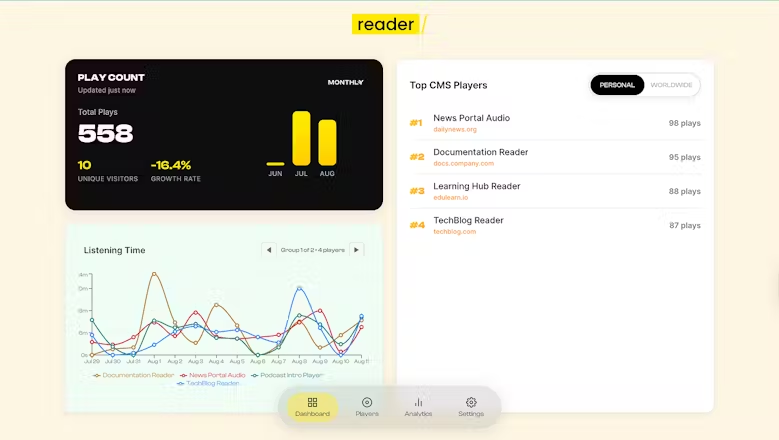
From the setup side, the workflow is designed for simplicity: add your site, choose voice & design, embed the widget once, and the rest is mostly automatic. The reporting dashboard shows metrics like play counts, completion rates and listening duration per post, enabling creators to track how the audio version performs. For bloggers, content-creators and publishers, Butter Reader offers a way to add a layer of audio content without needing to record audio manually or invest in separate podcast-infrastructure. In short: it’s a tool to make your written content heard, not just read.
🌟 Why You Should Choose
Add audio format to your blog easily – With minimal setup (one embed), your written posts can become listenable content, opening up to audiences who prefer audio.
Brand-matched customization – Choose voice style, pace, player look and colours so the audio experience remains consistent with your brand and website aesthetics.
Improve engagement & accessibility – Audio versions can increase time spent, reach users on-the-go, support diverse accessibility needs and potentially improve retention.
Automated workflow with minimal maintenance – After initial setup, new posts get converted and published with little extra manual work, freeing you from recording/editing overhead.
Analytics support to measure impact – The dashboard gives you data like plays, completion rate and listen duration so you can evaluate how audio is working and refine your content strategy.
⚙️ Additional Highlights
Supports major CMS and website platforms and requires a simple embed script to integrate.
Offers a variety of voice options (tone, gender, style) so the audio narration can match your brand voice.
Customizable player layouts (wave-form visuals, minimal player, branded colours) enhance the audio experience visually.
Analytics dashboard tracks listener behaviour, and you can use that data to optimise voice choices, post length, or player placement.
Focused on blogs and articles—a good fit for publishers wanting to offer multi-format content without creating separate podcasts or complex production workflows.
Launch Date & Founder Name
The platform appears to have launched around 2023–2024.
Detailed founder information is not widely publicised.
Pros And Cons
Pros:
- Simplifies adding audio versions of written content without dedicated recording.
- Enhances accessibility and caters to users who prefer listening over reading.
- Customisation allows brand-consistency in voice and visual player.
- Analytics provide actionable insights into how audio content performs.
- Good fit for bloggers, publishers, creators wanting to expand formats without major additional investment.
Cons:
- While easier than full audio production, it still adds a layer (embed, voice choice, monitoring) that requires setup.
- The voice-over is AI-generated—not human-recorded—so nuance, emotional inflection or extremely high production quality may lag human narration.
- If your blog posts are very short (<300 words) or overly technical, audio may not provide as much benefit relative to effort or embedding space.
- Usage limits or customization features may be restricted in lower-tier plans—heavy-use publishers should review pricing and scalability.
- Having an audio widget alongside text may impact page load or layout if not optimised; careful placement and design choice is still needed.